
Resources
Share a resourceExamples, recommended readings, methodologies and websites — linked to the framework.
 Recommended Reading
The Field Guide to Human-Centered Design
IDEO.org's hands-on field guide to human-centered design for the social sector — mindsets, fifty-seven methods and cases for going from understanding people to prototyping solutions. Almost a textbook for two SDF components working together: Humans and Procedures.
 Recommended Reading
The Elements of a Home
The charming backstories of sixty-odd everyday household objects — why forks were once thought immoral, how napkins began as lumps of dough. A reminder, in SDF terms, that even the humblest object carries values and manners: the small, domestic end of the Ethics motto.
 Recommended Reading
The Design of Everyday Things
Norman's canonical text on why some things are a joy to use and others a daily frustration — affordances, feedback, and the cognitive psychology of everyday objects. The book that put the SDF's Humans and Observations components at the heart of design.
 Recommended Reading
The Creativity in You
Olatunji's conversational argument that creativity belongs to everyone and, through design thinking, drives progress in a chaotic, fast-moving world — while answering to the demands of the natural world. A humanistic take on the SDF's Procedures component: creativity as a learnable practice.
 Recommended Reading
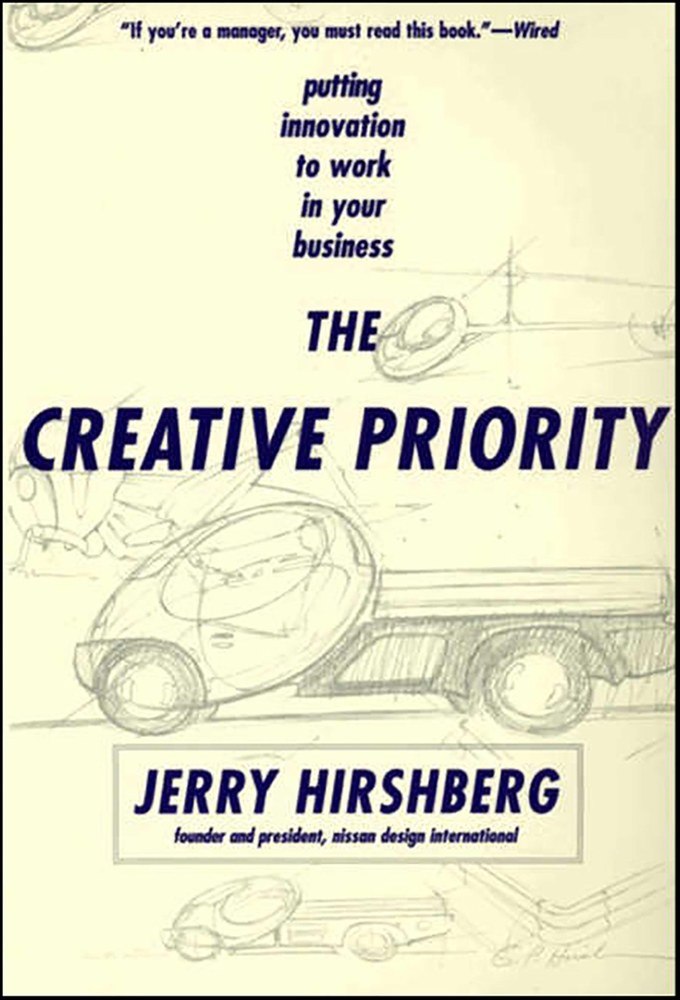
The Creative Priority: Putting Innovation to Work in Your Business
Hirshberg, founding president of Nissan Design International, recounts how he built an organisation around creativity — eleven interlocking strategies for making innovation routine. An organisational take on the SDF's Procedures component: designing the conditions for design.
 Recommended Reading
The Business of Design: Balancing Creativity and Profitability
Granet's practical guide to running design as a viable business — billing, staffing, branding, licensing and project management. The unglamorous but essential side of the SDF's Economics motto: keeping a practice alive so the work can continue.
 Recommended Reading
The Black Experience in Design
A landmark anthology of teaching, research and conversation seen through a Black and African-diasporic lens — voices long marginalised in design education. It works on the SDF's institutional facet, widening whose knowledge counts inside the profession.
 Recommended Reading
The Art of Innovation
Kelley's inside stories from IDEO — how a leading studio runs brainstorms, prototypes fast and keeps innovating. A widely-read playbook for the SDF's Procedures component, straight from the design-thinking mainstream.
 Recommended Reading
The Accidental Instructional Designer
Bean's friendly, practical induction into e-learning design for people who fell into the job — full of pitfalls to avoid and techniques to borrow. A view of the SDF's Procedures component through the discipline's institutional facet: how a profession trains its own newcomers.
 Recommended Reading
Symbiotic Design Framework the Book Rethinking Design from within
The framework's own source text. Raineri reframes design itself as an autopoietic — self-creating — social system, drawing rigorously on systems biology (Maturana and Varela), cybernetics and Luhmann's sociology to ask how design might be reoriented in an age of ecological and social crisis. Not a book to relate to the SDF: this is the SDF, the origin of every component, motto and facet the rest of this list is read through.
 Recommended Reading
Supernatural: The Work of Ross Lovegrove
The first monograph on Ross Lovegrove, written by the designer himself, tracing his organic, nature-inspired forms realised through advanced materials and technology. It couples the SDF's Technological component to its epistemic-ontological facet — a designer's philosophy made visible in the Outcomes.
 Recommended Reading
Substract
Klotz's argument that we systematically overlook subtraction — that removing can be as powerful as adding, whether we're dismantling racism or healing the planet. A counter-intuitive lens on the SDF's Social-Responsibility motto: sometimes the responsible design is the one that takes away.